Showing posts with label Car. Show all posts
Showing posts with label Car. Show all posts
Jeep Grand Cherokee SRT8

Jeep Grand Cherokee SRT8, Number One Speed, Jeep Grand Cherokee SRT8. While we've heard reports that the SRT (or SRT8, depending on whom you trust) will get as much as 500 hp from its new 6.4-liter Hemi V8, we're at least certain that the SRT is actually coming, and likely to arrive late this summer. If it's anything like the already deeply impressive Grand, the SRT8 is going to be both refined and scary fast, with a predicted eight-speed transmission and at a price (roughly $45,000) that deeply undercuts the likes of the Porsche Cayenne Turbo and other performance crossovers.
ALSO: In 2012 we'll see a Maserati 4x4 based on this Jeep's platform, with a Ferrari-designed V8 under the hood. How come? Because Fiat owns both Chrysler (Jeep's parent) and Maserati/Ferrari. If you have a deeper philosophical question, like, "Does the world need a Jeeperati?," we'll advise that you sit back and let the market decide.
Hyundai Veloster Future Car

Hyundai Veloster Future Car, Number One Speed, Hyundai Veloster Future Car. Hyundai is pulling a very neat trick with its Veloster. It's a slightly larger car inside than the Scion tC (and Mini Clubman or Honda CR-Z hybrid). Yet thanks to a very low 2,600-pound curb weight—400 pounds less than the tC— it's said to get up to 40 mpg from its directly injected, 1.6-liter four-cylinder engine. That would best Honda's CR-Z numbers without necessity of hybrid technology, and with the benefit of a bigger cabin. One oddity: Access to the interior is a bit quirky, with one door on the driver's side, but both front and rear doors on the passenger side. Remember that weight? Fewer doors allow a carmaker to reduce structural reinforcements, and that keeps down bulk. And a low weight allows an increase in fun factor—indeed, Hyundai is promising greater sportiness than its rivals. Can the Veloster "out-fun" a Mini? Hmm, we're not sure, but Hyundai is promising a tighter turning circle than even a base Mini Cooper and a sophisticated, buttoned-down-sounding suspension. Transmissions include Hyundai's first dual-clutch six speed (hopefully with paddles) or a six-speed manual. Pricing should be in the $20,000 range.
source: http://www.popularmechanics.com
Hyundai Veloster Future Car
Maserati’s Mid-Engine ‘Birdcage’
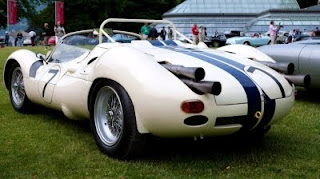
Maserati’s Mid-Engine ‘Birdcage’, Number One Speed, Maserati’s Mid-Engine ‘Birdcage’. In the second half of the 1950s, Maserati switched from producing mainly racing cars to the much more lucrative road-car market. Competition cars were still produced but only for customers as the works team had been disbanded after the disastrous end of the 1957 season.
These customers included such prominent privateers as Scuderia Serenissima, Camoradi and Briggs Cunningham.
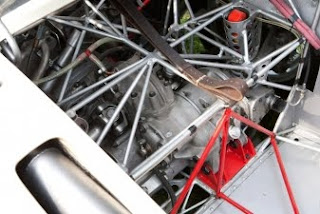
Maserati's unique space-frame design made up of small-diameter tubes earned its race cars the nickname "Birdcage." (Photo: Wouter Melissen)
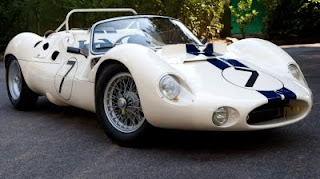
For 1961, they commissioned the construction of the Tipo 63 Birdcage, Maserati's first-ever mid-engine racing cars. While it shared many components with the earlier front-engine Birdcages, the new racer did not inherit the fine handling characteristics of the original space-frame Maseratis.
While the first cars were fitted with four-cylinder engines, a V12 was readied to power the mid-engine racers. This was completed in time for the 24 Hours of Le Mans, where the sole surviving example finished fourth, which to date is Maserati's best ever result in the legendary endurance race.
https://blogger.googleusercontent.com/img/b/R29vZ2xl/AVvXsEgvaF_INQ5Oryvlnf1kY6iOmSMKvrA_W0JbxNTr9R-Ty1Q6qi0f1z4D64fiTyqusDli_BPOgsaZCzyA3UvIxHWEfrLHHDUe-_RzXs35oSY7k6ax5NzJswWqAq79OGEvlIgqIZiVGotOzC69/s1600/Maserati%25E2%2580%2599s-Mid-Engine-Birdcage-car.jpg" onblur="try {parent.deselectBloggerImageGracefully();} catch(e) {}">
Later in the year, the cars were raced with some success in the United States, but handling and reliability issues resulted in early retirements for most of the seven cars built. Revised Tipo 64s and a sole V8-powered Tipo 65 followed, but they also failed to impress.
Although not particularly successful in period, the Tipo 63 Birdcage V12 is one of the most spectacular Maserati racing cars ever constructed. Over the years we have been fortunate to photograph three examples, resulting in this 24-shot gallery.
The restored ex-Cunningham car was shown at the 2011 Concorso d'Eleganza Villa d'Este in Italy. (Photo: Wouter Melissen)
Maserati returned to racing after a brief break, in 1959 with the sophisticated and highly successful Tipo 60/61 “Birdcage.” Designed by Ing. Giulio Alfieri, the four-cylinder machine earned its nickname because of its spaceframe chassis constructed from a large number of short, small-diameter tubes. Rapid developments in race-car design, specifically the mid-engine revolution, forced Alfieri to start work on a replacement for the Birdcage just a year after it had been introduced.
Dubbed the Tipo 63, the new Maserati racer was one of Italy's first mid-engine sports racers. Despite moving the engine from ahead of the driver's compartment to behind it, Alfieri carried over many of the mechanicals of the still hugely competitive Tipo 60/61.
https://blogger.googleusercontent.com/img/b/R29vZ2xl/AVvXsEjoaslL9t5xA5vW8EiMoVuCp19J_b-vNCOFkhVTXzpNgaGifauevue9da70gSLi2oLCKEROBEy32pI-nLe5_6BgRl9YZssZkBaoooqBh9kwMf5Nsvp0lbC4_wN7eiUnn5Ti2uawTSufJLAD/s1600/Maserati%25E2%2580%2599s-Mid-Engine-Birdcage-race-car.jpg" onblur="try {parent.deselectBloggerImageGracefully();} catch(e) {}">
The key component, of course, was the sophisticated spaceframe chassis from the front-engine machine. Due to the nature of its construction, the chassis design was relatively easily modified to suit its application. Simply put, the driver's seat and the engine were swapped around.
With the space behind the driver's compartment now filled with the engine and gearbox, there was no room left for the fuel tank. This was split into two separate tanks, mounted laterally on either side of the cockpit.
source: http://www.speedtv.com/
Maserati’s Mid-Engine ‘Birdcage’
Subscribe to:
Posts (Atom)